Supporting technique
Myofascial Release
Fascia is the connective tissue that wraps and links every muscle in your body. After injury, stress or long hours in the same position, it can feel tight and restricted, and movement feels stiff or guarded. Myofascial release uses slow, sustained pressure and gentle stretch to help those areas soften and glide again.
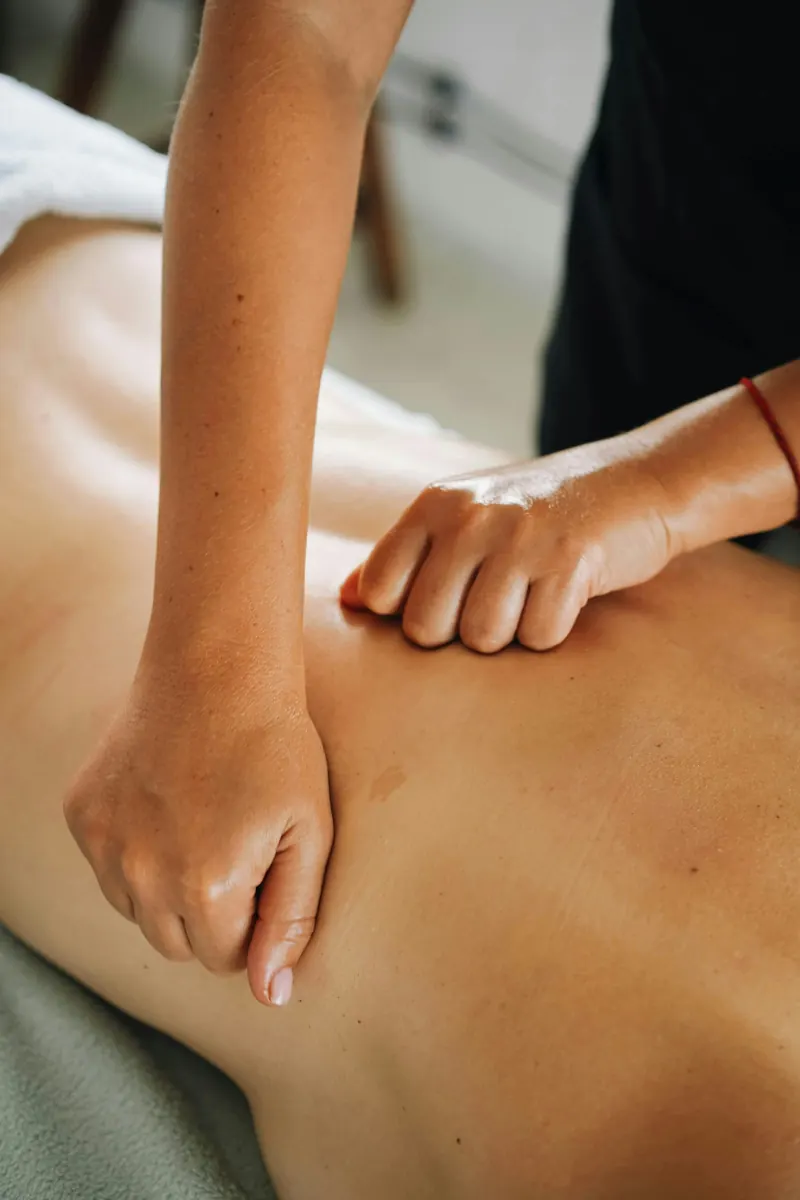
What it feels like
- Slower and more sustained than a typical massage. Pressure is held, not rushed.
- A deep stretch or gradual release you can feel spreading
- Pressure is always adjusted to what feels right for you
People often book it for
- Tightness that stretching doesn't touch
- Stiffness after sitting, driving or desk work
- Restricted movement after an old injury (with medical clearance)
- Recovery from training and repetitive strain
How Grace uses it
Sessions are built around NeuroKinetic Therapy: your history, how you move, and gentle muscle testing to see which muscles are overworking. Myofascial Release is one of the tools Grace may use on those muscles, sometimes alongside pressure point release, depending on what the assessment shows.
Hands-on release is followed by gentle activation of the muscles that have gone quiet, and a couple of short home exercises. Sessions are $100, paid in person at your appointment.
Massage isn't a substitute for medical care. If you have a recent injury, a blood-clotting condition, are pregnant, or have new or severe symptoms, check with your doctor first and let Grace know.
Is this massage?
Not exactly. Sessions are built around NeuroKinetic Therapy®, an assessment-led approach to how your muscles are coordinating. Hands-on techniques such as myofascial release, pressure point and neuromuscular work are used where the assessment shows they're needed, alongside gentle activation and home exercises. It's different from a relaxation or spa massage, and it isn't physical therapy, chiropractic or medical treatment.
How much does it cost?
Sessions are $100, paid in person at your appointment. Nothing is charged ahead of time, and there's no contract. In-home and travel sessions are arranged and priced individually.
How is this different from a regular massage?
A massage can feel great, but tight spots often come back. NKT looks at why a muscle keeps overworking, usually because another one has gone quiet. Grace releases what's overworking, retrains what's gone quiet with gentle, specific activation, and gives you exercises so the change has a better chance of lasting.
Can I book hands-on work only?
Yes. Mention it in your request. Most people get the most from a full session, where the NKT assessment guides which areas the hands-on work focuses on.
Does it hurt?
NKT muscle testing uses light, gentle pressure, and retraining is gentle activation rather than hard exercise or stretching. Some hands-on techniques, like pressure point work, can feel intense on tender spots, but you're always in control of the pressure.
What should I wear?
Comfortable clothes you can move in. If hands-on work is needed on a particular area, Grace will explain what works best, and you'll be professionally draped.
SF Bay Area & Birmingham area · By appointment
Explore whether NKT may be a fit for your goals.
Send a quick request with a few days and times that work for you. Grace will reach out to confirm. Sessions are $100, paid in person.